Why does my concrete slab have white powder on it
That chalky white powder on your concrete slab is efflorescence - salt crystals left behind by water moving through the concrete. Here's what causes it in La Jolla and how to fix it.
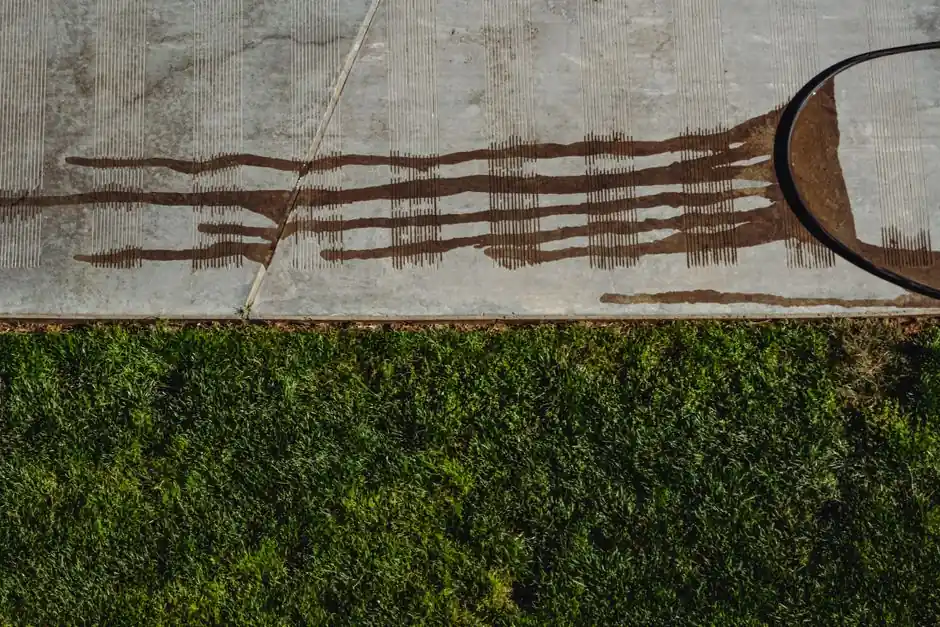
White powder on a concrete slab is efflorescence - mineral salts carried to the surface by moisture moving through the concrete, then left behind as chalky white crystals when that water evaporates. It is not mold, it is not usually a sign of structural failure, and in most La Jolla slabs it clears up once you remove the salt and cut off the moisture source feeding it. Below we cover what causes it, how to tell it apart from other white stains, how to remove it, and how to keep it from coming back.
What white powder on a concrete slab actually is
White powder on concrete is efflorescence, a crystalline salt deposit that forms when water dissolves naturally occurring salts inside the concrete and carries them to the surface. Concrete is porous. It holds free calcium hydroxide and other soluble minerals from the Portland cement, and any time water passes through the slab - from below, from the side, or from above - it picks those minerals up.
When the water reaches the surface and evaporates, the minerals stay. They dry into a white, powdery film that looks like flour or baby powder. On a slab that stays damp, the deposit builds in layers and can eventually look like a crust.
The key point: the powder is a symptom, not the problem. The problem is moisture. Remove the powder without addressing the water and it returns within weeks.
Why does my concrete slab have white powder on it in La Jolla?
In La Jolla, the white powder almost always traces back to one of four moisture sources: coastal humidity, irrigation overspray, poor drainage around the slab, or a slab poured without a vapor barrier underneath. Our marine layer alone can push relative humidity above 80% on summer mornings, and that moisture is enough to keep a slab wicking salts for months.
Here is what we see most often on service calls across the 92037 ZIP code:
- No vapor barrier under the slab. Older slabs - anything poured before the 1990s - often sit directly on damp soil. Ground moisture rises through the concrete year-round.
- Irrigation hitting the slab edge. Sprinkler heads aimed at a driveway or patio edge soak the concrete twice a day. That is a constant water supply.
- Poor grading. Water pooling against the slab after rain pushes into the concrete from the side, then wicks upward.
- Coastal salt air. Homes in La Jolla Shores concrete services territory deal with salt-laden air that accelerates surface mineral deposits, especially on slabs that never fully dry.
New concrete is the other common trigger. Fresh slabs poured within the last 6-12 months still hold excess mixing water, and that water has to escape. Efflorescence on a new driveway or patio is normal and usually fades after the first dry season.
How to tell efflorescence from other white stains
Not every white mark on concrete is efflorescence, and treating the wrong stain wastes a weekend. Here is how to tell them apart in about 30 seconds.
- Efflorescence: powdery, wipes off with a dry brush, dissolves in water, and reappears in the same spots after a few weeks.
- Calcium carbonate (a hardened form of the same deposit): crusty, does not wipe off, fizzes slightly when you drip white vinegar on it.
- Mold or mildew: usually green, black, or grey, grows in shaded areas, and smells musty when wet.
- Paint or sealer haze: uniform film, does not brush off, and appeared right after a coating job.
- Salt from winter de-icing: rare in La Jolla but possible if you have used rock salt nearby. It looks similar but tests salty to the tongue.
If the powder brushes off as a fine dust and the slab underneath is sound, you are looking at efflorescence. If the concrete is crumbling, flaking, or spalling underneath the powder, the moisture has done real damage and you need a repair, not a cleaning.
How to remove white powder from a concrete slab in La Jolla California
Removing white powder from a concrete slab is a three-step job: dry-brush first, wash with a mild acid, then rinse thoroughly. Skip the dry-brush step and you will push the salt into the pores instead of lifting it off.
- Dry-brush the slab. Use a stiff-bristle push broom or a wire brush on a pole. Work in one direction and sweep the powder off the edge - do not sweep it into the yard where it can stain landscaping.
- Wash with a diluted acid. A 10:1 mix of water and white vinegar handles light deposits. For heavier crust, use a commercial efflorescence remover (muriatic acid diluted to roughly 5-10%) - always add acid to water, never water to acid, and wear gloves and eye protection.
- Scrub and dwell. Apply the mix, let it sit 3-5 minutes, scrub with a stiff brush, then rinse with a hose. Repeat on stubborn areas.
- Rinse twice. Residual acid keeps reacting with the concrete and can etch the surface. Rinse, wait 10 minutes, rinse again.
For a typical 400-square-foot driveway, expect 2-3 hours of work and $30-$80 in materials if you do it yourself. A professional concrete driveway repair in La Jolla, California crew will pressure-wash, treat, and seal the same slab in a single visit, usually for $250-$600 depending on square footage and how deep the deposit has set.
Do not pressure-wash efflorescence at full blast. High pressure drives water deeper into the slab and makes the next bloom worse. Keep the wand at 1,500-2,000 PSI and a 25-degree tip.
How to prevent efflorescence on a concrete slab in La Jolla
Preventing efflorescence on a concrete slab in La Jolla comes down to one thing: keep water out of the concrete. Every fix below is about cutting off the moisture supply.
- Fix the grading. Soil should slope away from the slab at roughly 1 inch per foot for the first 6 feet. If water pools at the edge after rain, that is your source.
- Redirect irrigation. Aim sprinkler heads away from slab edges. Drip irrigation on the planting beds is better than spray heads near a driveway or patio.
- Seal the slab. A breathable silane-siloxane sealer applied every 3-5 years blocks surface water without trapping vapor. Film-forming sealers can make efflorescence worse - the water still rises, but the salt cannot escape and pushes the coating off.
- Add a vapor barrier on new pours. Any new slab we pour gets a 10-15 mil polyethylene barrier under it. This is the single most effective prevention step and it costs almost nothing on a new build.
- Keep gutters and downspouts clear. A downspout dumping next to a patio slab is a slow, steady water source.
If you are planning a new slab and want it done right the first time, our concrete slab installation in La Jolla, California work always includes a vapor barrier, proper base compaction, and a curing schedule that limits excess water in the mix.
Common mistakes we see homeowners make
The same handful of mistakes show up on almost every efflorescence call we run in La Jolla. Avoiding them saves you time and money.
- Sealing over the powder. Sealer traps the salt under a film. Within a month the coating blisters and peels, and now you have two problems.
- Using bleach. Bleach does nothing to mineral salts and can discolor the concrete. Save it for mold.
- Pressure-washing at 4,000 PSI. This drives water into the slab and etches the surface. You will get a cleaner slab and a worse bloom two weeks later.
- Ignoring the water source. Cleaning without fixing the drainage or irrigation means the powder returns every 4-8 weeks.
- Assuming it is mold. Homeowners often treat efflorescence as a mold problem, then wonder why the mold treatment did not work.
One more: do not paint a slab that is actively efflorescing. Paint needs a dry, stable substrate. Fix the moisture first, let the slab dry 2-4 weeks, then coat.
When to call a professional
Call a professional when the powder keeps coming back after two cleaning cycles, when the concrete underneath is crumbling or flaking, or when you cannot find the moisture source. Those three situations point to a drainage, vapor barrier, or structural issue that surface cleaning will not solve.
We handle this every week. Our team at La Jolla Concrete Services inspects the slab, traces the moisture, and either treats the efflorescence or repairs the underlying concrete - whichever the slab actually needs. We give you a straight answer on whether it is a cleaning job or a repair job, and we do not sell you a reseal you do not need.
If your slab sits on a slope and the powder shows up along a retaining wall, the water is likely coming through the wall. That is a concrete retaining wall installation in La Jolla, California conversation, not a cleaning one.
Frequently Asked Questions
What causes white powder on concrete slab in La Jolla?
Moisture moving through the slab dissolves natural salts in the concrete and carries them to the surface, where they dry into white crystals. In La Jolla the usual sources are coastal humidity, irrigation overspray, poor grading, and slabs poured without a vapor barrier.
How do I remove white powder from my concrete slab in La Jolla California?
Dry-brush the powder off first, then wash with a 10:1 vinegar-and-water mix or a diluted commercial efflorescence remover. Scrub, rinse twice, and let the slab dry. A 400-square-foot slab takes 2-3 hours and $30-$80 in materials.
Is white powder on concrete slab dangerous in La Jolla?
No. Efflorescence is a mineral salt deposit, not mold or a toxin. It is not a health hazard and does not weaken the slab on its own. It does signal moisture, though, and untreated moisture can eventually cause spalling or cracking.
How to prevent concrete slab efflorescence in La Jolla?
Cut off the water. Grade soil away from the slab at 1 inch per foot, redirect sprinklers, keep downspouts clear, and apply a breathable silane-siloxane sealer every 3-5 years. New slabs should always have a 10-15 mil vapor barrier underneath.
Does efflorescence mean my concrete is failing?
Not by itself. A sound slab with white powder just has a moisture path. If the concrete under the powder is soft, flaking, or crumbling, that is spalling and it does need repair - usually within a few months of first showing.
Get help with Concrete services in La Jolla
If the white powder on your slab keeps coming back, or you want it gone before it damages the surface, we can help. Our team handles efflorescence removal, moisture tracing, and slab repair across La Jolla and the surrounding 92037 neighborhoods.
Call +1 (619) 984-1234 to schedule an inspection. We will tell you what is causing it and what it takes to fix it - no guesswork.