How to install a concrete walkway on a slope in Mount Soledad
A sloped walkway in Mount Soledad needs steps, drainage, and a base that won't slide. Here's how we build them, what they cost in 2026, and when to call us.
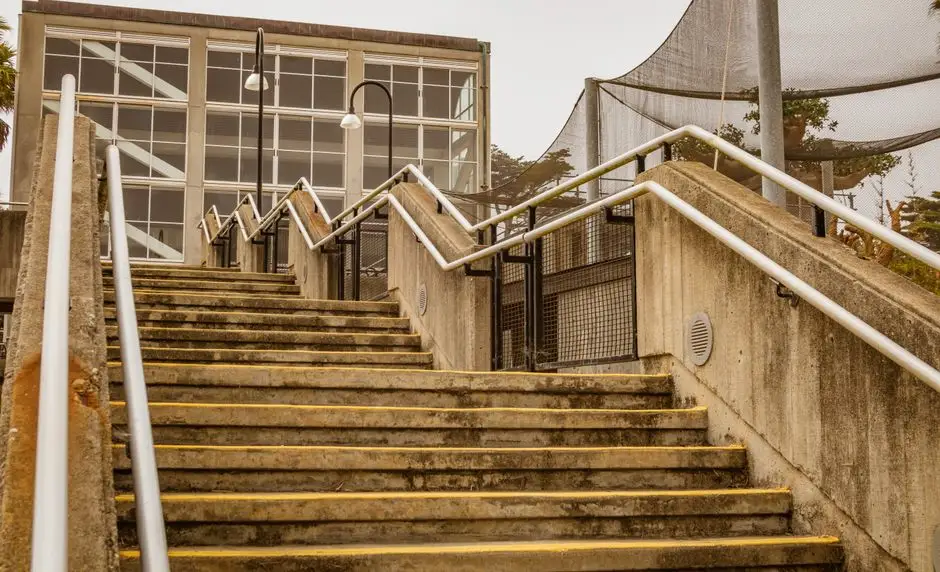
Installing a concrete walkway on a slope in Mount Soledad means cutting the hill into stepped runs, pouring each run on undisturbed soil or compacted base, and giving water a path that doesn't run under the slab. You cannot pour a single flat slab on a 15% grade and expect it to stay put - it will crack, heave, or slide within a few seasons. The rest of this post walks through how we actually build these on the hillside streets above La Jolla, what it costs in 2026, and where a homeowner can realistically do the work themselves.
Why Mount Soledad slopes behave differently
Mount Soledad is not a gentle hill. Drive up Via Capri or Hillside Drive and you'll see grades that hit 20% to 30% in short stretches, with lots cut into the hillside and retaining walls holding the yard above the street. That geometry changes everything about a walkway.
Three things make these slopes harder than a flat La Jolla yard:
- Grade. Anything over about 8% needs steps or a terraced run. A 4-inch-thick slab on a 20% grade is a sled waiting for rain.
- Soil. Much of the hillside is decomposed granite and clay over sandstone. It drains poorly when saturated and moves when it dries.
- Water. Rain that hits the top of the slope has to go somewhere. If it goes under the walkway, the walkway loses.
We see the same failure pattern on older properties across Concrete services in Mount Soledad: a flat walkway poured 20 years ago, now cracked in three places with a 2-inch lip at the bottom step. That's not a concrete problem. It's a slope problem.
How do I install a concrete walkway on a slope in Mount Soledad?
You install a concrete walkway on a slope in Mount Soledad by breaking the run into stepped or ramped sections, excavating to undisturbed soil, compacting a 4-inch base, forming each section with a slight cross-slope for drainage, and pouring 4 to 5 inches of 4,000 psi concrete with rebar tied into the base. The work is sequenced, not poured in one shot.
Here's the short version of the sequence we follow:
- Lay out the path with a string line and mark the grade every 10 feet.
- Decide step vs. ramp for each segment (more on that below).
- Excavate 8 to 10 inches deep, down to firm soil.
- Compact 4 inches of class II base rock.
- Form each section, tie #3 or #4 rebar on a 16-inch grid.
- Pour, screed, float, and finish one section at a time.
- Cut control joints every 4 to 6 feet and cure for 7 days.
If you're comparing this to a flat pour, the difference is that each section is its own small slab. It moves independently, which is exactly what you want on a hill.
Steps for concrete walkway on slope La Jolla
Steps for a concrete walkway on a slope in La Jolla follow a simple rule: riser height plus tread depth should land between 17 and 18 inches, and no single riser should exceed 7 inches. That's the same rule the building code uses for stairs, and it's the rule your knees will enforce whether you follow it or not.
Typical numbers we use on Mount Soledad hillsides:
- Riser: 6 to 7 inches
- Tread: 11 to 12 inches
- Landing: every 8 to 10 steps, at least 36 inches deep
- Width: 36 inches minimum, 48 inches if you want two people to pass
When the grade is between 5% and 10%, you don't need steps at all. A sloped walkway with a broom finish handles that fine. Between 10% and 20%, we usually alternate short ramps and single steps - easier to walk, easier to wheel a trash can up. Above 20%, it's steps with landings, full stop.
If the walkway ties into a driveway at the bottom, the transition matters. A 1-inch lip at the driveway edge is a trip hazard and a water trap. We pour a flush transition and let the driveway handle the runoff - the same detail we use on concrete driveway installation in La Jolla, California projects where the driveway meets a sloped approach.
Drainage and soil on Mount Soledad
Water is what kills sloped walkways in La Jolla, not traffic. A walkway that sheds water off the sides will last decades. One that traps it will crack in the first wet winter.
Three drainage moves we build into every sloped walkway here:
- Cross-slope. A 1% to 2% tilt across the walkway so water runs off the downhill edge instead of pooling.
- Drain rock. A 4-inch gravel trench along the uphill side, wrapped in filter fabric, to intercept water before it reaches the slab.
- Daylighting. Every section drains to a visible exit - a curb, a planter, or a pop-up drain. No blind drains under the slab.
On the sandstone-and-clay lots near the top of the hill, we also check for expansive soil before we pour. If the soil swells 2 inches when wet, a 4-inch slab on top of it will move. In those cases we go deeper on the base and wider on the footings under any steps.
Homeowners in the neighborhoods just below the summit - especially around Concrete services in La Jolla Heights - deal with the same runoff coming down from above. If your neighbor's yard drains onto your slope, that's a design problem before it's a concrete problem.
How much does a sloped concrete walkway cost in La Jolla California?
A sloped concrete walkway in La Jolla costs $35 to $75 per square foot in 2026, depending on grade, access, and finish. Flat walkways run $15 to $25 per square foot. The slope roughly doubles the price because of excavation, forming, and the step work.
Realistic ranges we quote on Mount Soledad:
- Simple sloped walkway, 5-10% grade, 3 ft wide, 40 ft long: $4,500 to $7,000
- Stepped walkway, 15-20% grade, 4 ft wide, 60 ft long with two landings: $12,000 to $20,000
- Long hillside run with retaining wall and drainage, 100+ ft: $25,000 to $45,000
What drives the number up:
- Excavation depth - sandstone is slower than soil
- Access - if a bobcat can't reach the path, everything is wheelbarrowed
- Retaining walls on the uphill side
- Decorative finishes like stamped concrete in La Jolla, California, which add $8 to $15 per square foot
- Permits, if the walkway is over 30 inches above grade and needs a guardrail
We give a written price after we walk the slope. No surprises mid-pour.
Common mistakes on sloped walkway projects
The failures we get called to fix almost always trace back to one of these:
- Pouring on fill dirt. Fill settles. Concrete doesn't. The slab cracks along the fill line within two winters.
- Skipping rebar. Wire mesh alone doesn't hold a sloped slab together. You need #3 or #4 bar tied on a grid.
- No control joints. Concrete shrinks as it cures. Without joints every 4 to 6 feet, it cracks wherever it wants.
- Ignoring drainage. A walkway with no cross-slope becomes a shallow canal in a storm.
- Wrong step ratio. A 9-inch riser with a 10-inch tread is legal in some places and miserable everywhere. Stick to the 17-18 inch rule.
- Pouring in the heat. Above 85°F, concrete sets too fast to finish properly. We pour early morning on summer jobs.
If you already have a walkway that's failing, the fix is usually concrete walkway repair in La Jolla, California - mudjacking, crack stitching, or a full section replacement - not a new pour on top of the old one.
When to call a professional
You can pour a short, low-grade walkway yourself. If the slope is under 8%, the run is under 30 feet, and you can get a wheelbarrow to the site, a DIY pour is realistic.
Call us when any of these are true:
- The grade is over 10% and you need steps
- The path is longer than 40 feet
- There's a retaining wall involved
- Access is tight - narrow side yards, no equipment path
- The soil is expansive or you're not sure
- You need a permit or a guardrail
Our team handles the excavation, forming, rebar, pour, and finish, and we handle the drainage detail that keeps the walkway from cracking. We've built these on hillsides from La Jolla Shores up to the summit, and we know what the soil does here.
Frequently Asked Questions
How do I install a concrete walkway on a slope in Mount Soledad?
Break the run into stepped or ramped sections, excavate 8-10 inches to firm soil, compact 4 inches of base rock, form each section with a 1-2% cross-slope, and pour 4-5 inches of 4,000 psi concrete with rebar. Cut control joints every 4-6 feet and cure for 7 days.
How much does a sloped concrete walkway cost in La Jolla California?
Expect $35 to $75 per square foot in 2026. A simple 40-foot sloped walkway runs $4,500 to $7,000. A stepped walkway with landings and drainage on a 20% grade runs $12,000 to $20,000.
Can I build a concrete walkway on a slope myself in Mount Soledad?
Yes, if the grade is under 8%, the run is under 30 feet, and you can get materials to the site. Above 10% grade, or with steps, retaining walls, or tight access, the forming and excavation work is where DIY projects fail.
Who installs concrete walkways on slopes in Mount Soledad?
We do. La Jolla Concrete Services builds sloped and stepped walkways across Mount Soledad and the surrounding hillside neighborhoods. We handle excavation, forming, rebar, pouring, finishing, and drainage in one crew.
How long does a sloped concrete walkway take to install?
A 40-foot sloped walkway takes 3 to 5 days from excavation to final finish. Stepped walkways with landings run 7 to 12 days. Add 7 days of cure time before you walk on it heavily.
Get help with Concrete services in La Jolla
If you're ready to stop guessing at grade, drainage, and step ratios, we'll walk your slope and give you a written price. Call La Jolla Concrete Services at +1 (619) 984-1234 and we'll schedule a site visit.